History / Engineering
The Osceola Ditch: 18 Miles for Wheeler Peak Water
Two mountain ditches, a granite tunnel, and $108,000 spent to solve one problem: water.
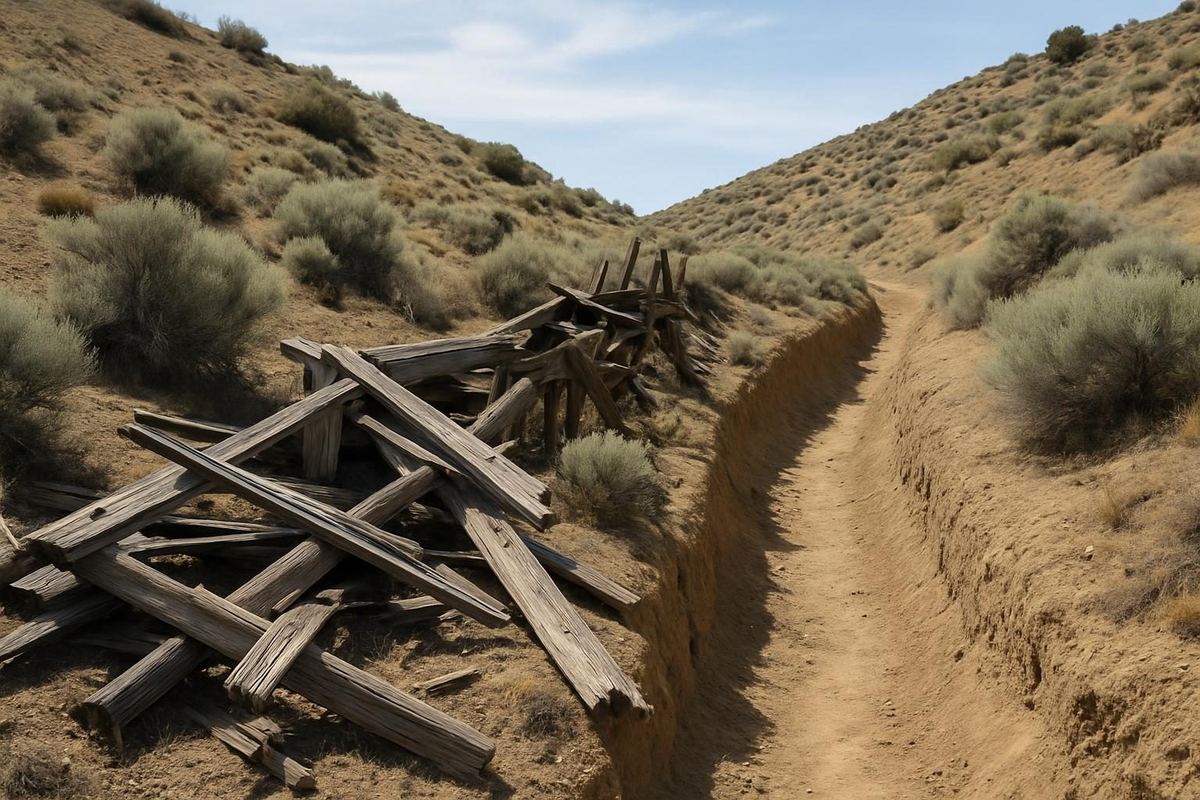
Everything at Osceola came down to water. The placer gold lay in deep, dry gravels high on the west side of the Snake Range, and hydraulic mining needed a large, steady flow of water under pressure to wash those gravels through the sluices. The range could not supply it where the gold was. So the operators went and got it, building two of the longest mining ditches in Nevada to carry mountain snowmelt across miles of rough country.
The West Ditch, and why it was not enough
The Osceola Gravel Mining Company, backed principally by Benjamin Hampton of Salt Lake City, built the first ditch in 1884 and 1885. It ran about 16 miles and gathered water from creeks on the west side of the range. It never carried enough. By September 1885 the mines were running only about two hours a day, and it was clear the company needed a far larger supply. That meant reaching the reliable snowmelt on the high east side, off Wheeler Peak.
The East Osceola Ditch
The East Osceola Ditch, the one now listed on the National Register of Historic Places, was the answer. Surveyed in 1885 and built from September 1889, it was finished on the Fourth of July, 1890. The numbers are precise because they survive in the record:
| Length | About 18 miles (95,133 feet including flumes and tunnel) |
| Cost | $108,222.65 |
| Water source | Lehman Creek and tributaries, fed by Wheeler Peak snowmelt; a headgate at Stella Lake |
| Capacity | About 2,500 miner's inches, roughly 40 million gallons a day |
| Key structures | A granite tunnel about 633 feet long at Strawberry Creek, and some 2.2 miles of wooden flume |
| Water rights | Bought from Absalom Lehman, discoverer of Lehman Caves, for about $10,000 |
It was a serious piece of engineering for a remote district: a contractor bored the Strawberry Creek tunnel through granite, crews carried the ditch along steep sidehills, and ditch-tenders lived in houses spaced along its length to keep it clear.
Eleven years, then dry
For all that effort, the East Ditch served the mines for only about eleven years. Even with both ditches, the hydraulic operation ran around the clock only briefly, and the gold yields disappointed, roughly $16,000 in 1890 and $20,000 in 1891 by the company's own figures. Then a run of mild, dry winters cut the snowpack that fed the system. The wooden flumes shrank and leaked in the dry mountain air, water was diverted and disputed, and lawsuits followed. Operations were curtailed through the 1890s, and the Osceola Placer Mining Company folded in 1900.
Today about ten miles of the East Ditch lie within Great Basin National Park. It is dry and overgrown, the flume long collapsed in most places and the tunnel partly caved, but its line can still be traced along the mountainside, a quiet monument to how far a mining camp would go for water. It was listed on the National Register of Historic Places in June 1996.