History / Nevada context
The Comstock Lode and Nevada’s Silver Rush
The 1859 strike that built Virginia City, enriched the West, and made Nevada the Silver State.
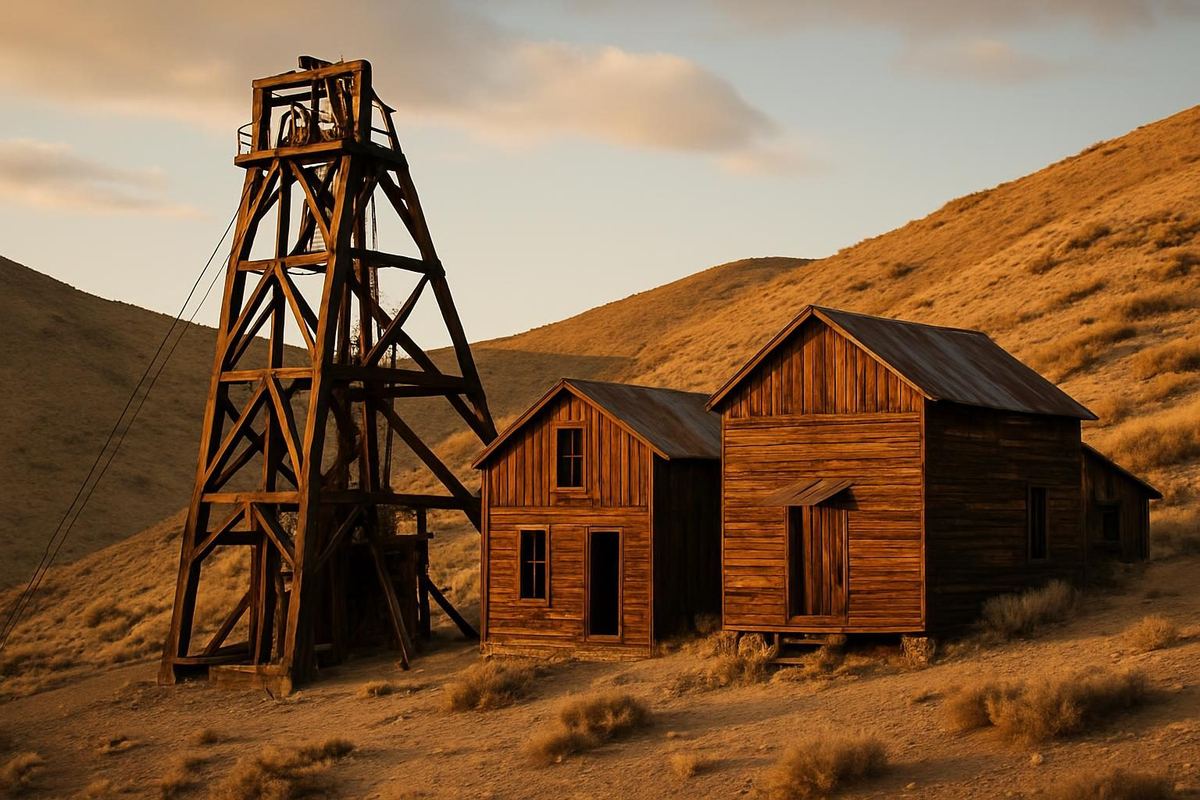
Osceola was a gold camp, but it lived inside a state that silver built. To understand Nevada gold country you have to start with the Comstock Lode, the strike that turned a stretch of the Sierra foothills into one of the richest mining regions in American history and helped make Nevada a state.
1859: the strike on Mount Davidson
In June 1859, prospectors working the eastern slope of Mount Davidson hit an extraordinarily rich body of ore near what became Virginia City. The deposit took its name from Henry Comstock, who talked his way into a share of the claim. Miners chasing gold had been fouling their rockers with a heavy blue-gray mud; assays showed the nuisance was silver sulfide of remarkable richness. The Comstock was the first major silver discovery in the United States, though it produced enormous quantities of gold as well, split roughly between the two metals by value.
Virginia City and the boom
Virginia City exploded from a few hundred people to a city of well over twenty thousand at its height. The Comstock financed grand mansions, deep and dangerous mining, and technical innovations that spread across the West, from square-set timbering to some of the deepest shafts of the age. Its wealth flowed to San Francisco and beyond, and its peak years in the 1870s poured out tens of millions of dollars annually in gold and silver combined.
Statehood, 1864
Comstock money and population arrived at a decisive moment. In the middle of the Civil War, Nevada was rushed to statehood, admitted on October 31, 1864, as the thirty-sixth state, which is why it carries the motto "Battle Born." The common line that Comstock silver financed the Union is a broad characterization rather than an audited figure, but there is no doubt that the region's mineral wealth and its loyal votes mattered to Washington in those years, and that the Silver State earned its nickname here.
Why Osceola stands apart
Most of Nevada's famous strikes, the Comstock, then Eureka, Tonopah, and Goldfield, were lode deposits, hard rock mined from veins and disseminated bodies. Modern Nevada gold is overwhelmingly lode gold too, from the Carlin-type deposits discovered in the 1960s that make the state a world gold producer. That is exactly what makes a placer camp like Osceola unusual: free gold in the gravels, recovered by water, in a state better known for silver veins and invisible gold in rock. Placer country is the exception in Nevada, and Osceola was its most famous example.