Prospecting / Gear
Gold Prospecting Equipment: What You Actually Need
You need less than the ads suggest. Here is the kit that finds gold, and the kit that wastes money.
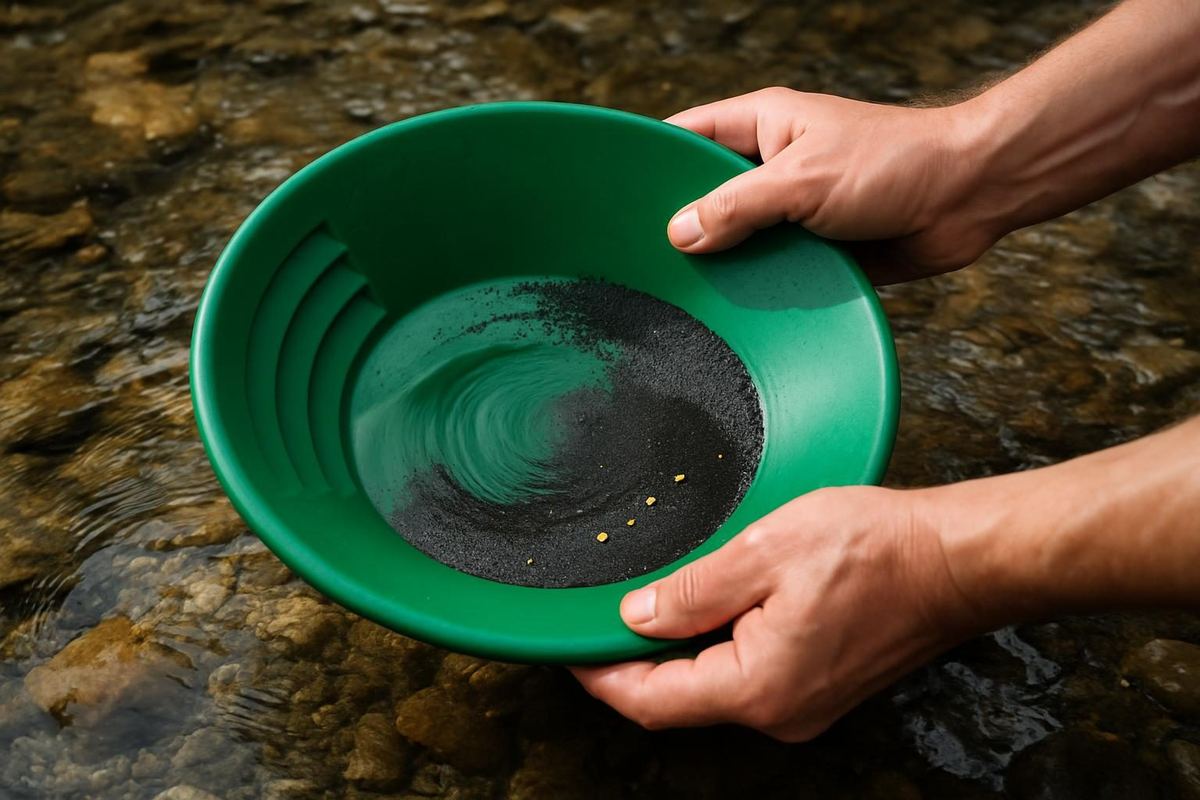
The gear industry would like you to spend a lot of money before you find your first flake. You do not need to. Placer prospecting rewards knowledge and patience far more than equipment, and almost everything a beginner recovers comes out of a fifteen-dollar pan. Here is what actually matters, in the order you should buy it.
Start here (a complete beginner kit)
- Gold pan. A plastic pan with molded riffles on one side. Plastic beats the old steel pans because it will not rust, it is light, and the riffles help trap fine gold. A 12 to 14 inch pan is a good all-round size.
- Classifier. A sieve that sits on a bucket and screens out the coarse rock, so you pan only the finer material where fine gold hides. A single half-inch classifier is plenty to begin.
- Snuffer bottle. A squeeze bottle that sucks up fine gold from the pan without losing it. Cheap, and the difference between keeping and losing your finds.
- Vials, a scoop, and tweezers. A glass vial to store gold, a plastic scoop to fill the pan, and fine tweezers for picking up small nuggets.
That is the whole starter list, and it is what we recommend in how to pan for gold. Learn to read a stream and work a pan well before you spend another dollar.
Add later, once you are hooked
- Sluice box. A channel with riffles that lets moving water process far more gravel than a pan. A hand-fed sluice is still casual use on most open public land, no motor required.
- Metal detector. A gold-capable detector is the tool of choice for nugget hunting on Nevada's dry ground, and it is how much of the Rye Patch country is worked. It is a real investment and a real skill, so buy it when you are ready to specialize.
- Dry washer. Because much of Nevada is arid, a dry washer, which separates gold using air instead of water, is the region's signature tool for working dry placers. Powered versions move into permit territory.
What to skip
Ignore gold-plated "prospector kits" sold on gimmick, novelty vials of "paydirt" that promise guaranteed gold, and anything motorized until you understand the rules. Suction dredges and powered equipment are not casual use and require authorization, and buying one before you know the law is a fast way to a fine. Knowledge first, then a pan, then, maybe, a detector.